
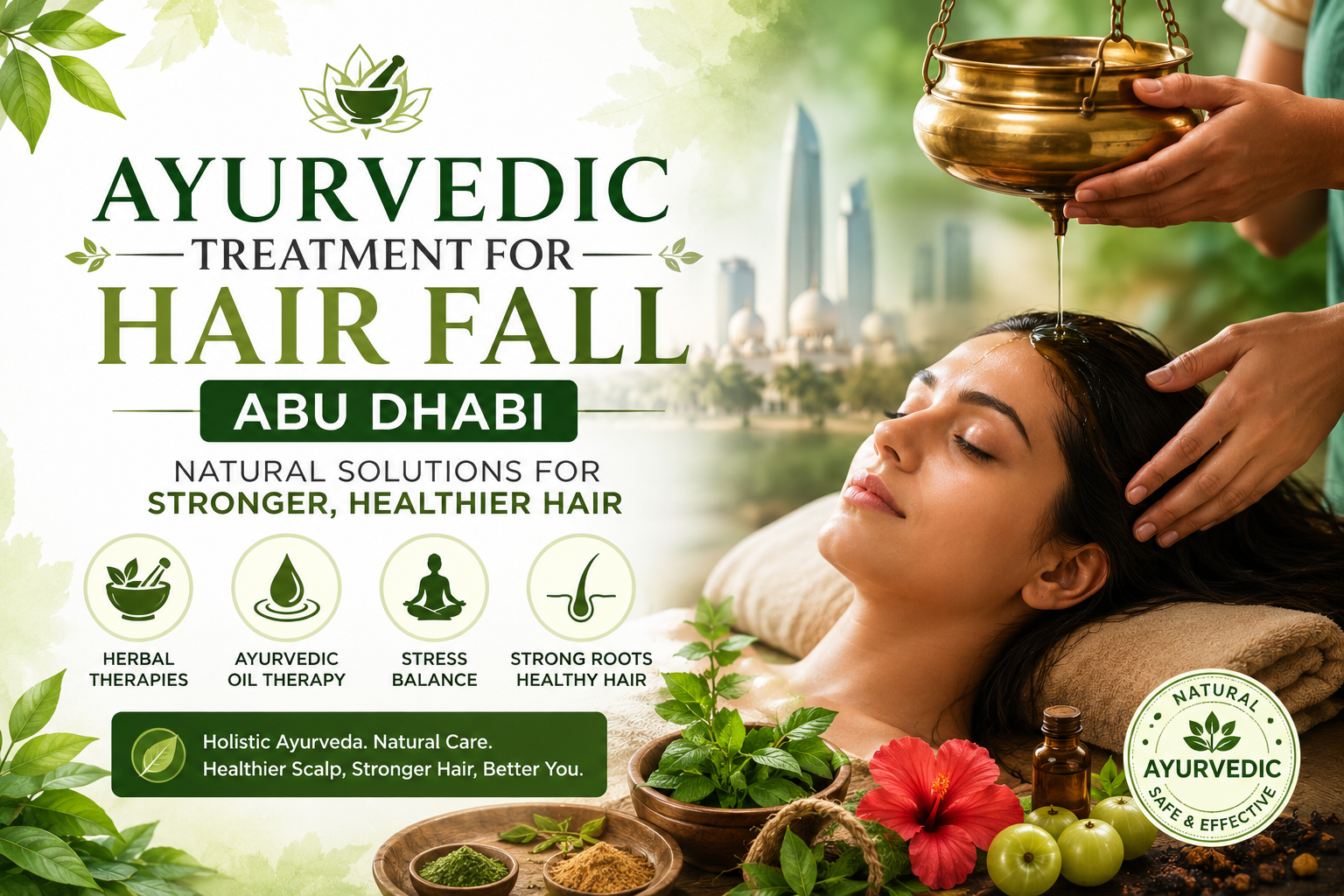
Hair fall has become one of the most common health and beauty concerns affecting both men and women. Whether it is caused by stress, hormonal changes, poor nutrition, pollution, or underlying medical conditions, excessive hair loss can significantly impact confidence and overall well-being. While many people rely on temporary cosmetic solutions or chemical-based treatments, Ayurveda offers a natural and holistic approach that focuses on treating the root cause rather than simply addressing the symptoms.
If you are looking for ayurvedic treatment for hair fall abu dhabi, choosing authentic Ayurvedic therapies can help restore scalp health, strengthen hair follicles, improve hair growth, and reduce excessive shedding naturally. Unlike treatments that provide only short-term improvements, Ayurveda combines herbal medicines, therapeutic oils, detoxification procedures, dietary guidance, and lifestyle modifications to promote long-lasting hair health.
Why Hair Fall Is Increasing Today
Hair loss is no longer limited to ageing adults. Teenagers and young professionals are increasingly experiencing premature hair thinning due to modern lifestyles. Long working hours, unhealthy eating habits, chronic stress, environmental pollution, and excessive use of styling products have all contributed to weaker hair and unhealthy scalps.
In cities like Abu Dhabi, additional factors such as extreme heat, dry climate, hard water, air conditioning, and changing dietary patterns can further affect hair quality. These environmental conditions often strip the scalp of natural moisture, making hair brittle, dry, and prone to breakage.
Understanding the underlying cause of hair loss is the first step toward choosing the most effective treatment.
Common Causes of Hair Fall
Hair loss rarely occurs due to a single reason. In most cases, several internal and external factors work together to weaken the hair follicles.
1. Nutritional Deficiencies
Hair requires essential nutrients such as iron, protein, zinc, vitamin D, vitamin B12, biotin, and omega-3 fatty acids. A diet lacking these nutrients can slow hair growth and increase hair shedding.
2. Hormonal Imbalance
Hormonal fluctuations caused by thyroid disorders, pregnancy, menopause, or conditions like Polycystic Ovary Syndrome (PCOS) can disrupt the normal hair growth cycle, resulting in excessive hair fall.
3. Chronic Stress
Physical and emotional stress can trigger a condition known as telogen effluvium, where a large number of hair follicles prematurely enter the resting phase, leading to sudden hair shedding.
4. Scalp Conditions
Dandruff, fungal infections, psoriasis, eczema, and excessive oil production can weaken hair roots and affect healthy hair growth.
5. Genetics
Hereditary hair loss affects both men and women. Although genetics cannot be changed, early intervention may help slow progression and maintain healthier hair for longer.
6. Heat and Chemical Damage
Frequent colouring, bleaching, straightening, rebonding, and excessive use of heat styling tools damage the hair shaft, causing breakage and thinning over time.
7. Medical Conditions
Autoimmune disorders, diabetes, anaemia, prolonged illness, certain medications, and nutritional disorders can all contribute to persistent hair loss.
Understanding Hair Growth
Healthy hair grows in a continuous cycle consisting of three phases:
Anagen Phase
This is the active growth stage, lasting between two and seven years. Around 85–90% of healthy hair remains in this phase.
Catagen Phase
This short transition stage lasts approximately two weeks, during which hair growth slows and the follicle begins preparing for rest.
Telogen Phase
The resting phase lasts for about three months before the hair naturally sheds and a new strand begins growing.
When this cycle is disrupted by illness, stress, hormonal imbalance, or poor scalp health, excessive hair fall becomes noticeable.
Hair Fall According to Ayurveda
Ayurveda, the ancient Indian system of medicine, views hair as a reflection of overall health rather than an isolated cosmetic concern. According to Ayurvedic principles, healthy hair depends on proper digestion, balanced nutrition, efficient circulation, mental well-being, and balanced doshas.
The three doshas—Vata, Pitta, and Kapha—govern all bodily functions. Hair problems develop when one or more doshas become imbalanced.
Pitta Imbalance
Pitta governs metabolism and body heat. Excess Pitta is one of the leading Ayurvedic causes of premature hair fall, early greying, scalp inflammation, and thinning hair.
Common signs include:
- Warm scalp
- Excessive sweating
- Premature greying
- Hair thinning
- Scalp irritation
Vata Imbalance
Vata controls movement and nourishment. When aggravated, it causes dryness and poor circulation, resulting in brittle hair and split ends.
Typical symptoms include:
- Dry scalp
- Rough hair texture
- Split ends
- Hair breakage
- Frizzy hair
Kapha Imbalance
Kapha maintains moisture and stability. Excess Kapha may lead to an oily scalp, clogged follicles, dandruff, itching, and slower hair growth.
Common symptoms include:
- Sticky scalp
- Heavy dandruff
- Greasy hair
- Itching
- Scalp congestion
Ayurvedic Diagnosis for Hair Fall
Unlike conventional treatments that often focus only on visible symptoms, Ayurveda begins with a detailed assessment to identify the underlying cause of hair loss.
An Ayurvedic practitioner may evaluate:
- Individual body constitution (Prakriti)
- Current dosha imbalance (Vikriti)
- Digestive health (Agni)
- Presence of toxins (Ama)
- Stress levels and sleep quality
- Medical history
- Dietary habits
- Lifestyle patterns
- Scalp condition
- Hair texture and density
This personalized assessment helps create an individualized treatment plan instead of applying the same solution to every patient.
Why Treat the Root Cause?
Many over-the-counter hair products promise quick improvements but often fail to address the underlying reason for hair loss. Ayurveda aims to restore internal balance, improve nutrient absorption, enhance blood circulation to the scalp, reduce inflammation, and support the body’s natural healing processes.
By focusing on the root cause, Ayurvedic care seeks not only to reduce hair fall but also to improve overall wellness, which can contribute to healthier, stronger hair over time.
Best Ayurvedic Treatments for Hair Fall
Ayurveda offers a holistic treatment approach that combines external therapies, internal herbal medicines, dietary corrections, detoxification, and stress management. The objective is not only to reduce hair fall but also to nourish the scalp, strengthen the hair follicles, improve blood circulation, and support healthy hair growth naturally.
Every treatment plan is personalized based on the individual’s body constitution, lifestyle, and the underlying cause of hair loss.
1. Shiro Abhyanga (Ayurvedic Head Massage)
Shiro Abhyanga is one of the most recommended Ayurvedic therapies for people experiencing hair fall. This therapeutic head massage uses warm, medicated herbal oils that penetrate deep into the scalp and nourish the hair roots.
Benefits of Shiro Abhyanga
- Improves blood circulation to the scalp
- Nourishes hair follicles
- Strengthens hair roots
- Reduces hair breakage
- Relieves stress and anxiety
- Promotes better sleep
- Helps reduce dandruff and scalp dryness
Regular head massage also stimulates dormant hair follicles and creates a healthy environment for natural hair growth.
2. Shirodhara Therapy
Shirodhara is a deeply relaxing Ayurvedic therapy in which a continuous stream of warm herbal oil is gently poured over the forehead.
Although many people associate Shirodhara with stress relief, it also plays an important role in managing stress-related hair loss.
Benefits
- Calms the nervous system
- Reduces stress hormones
- Improves sleep quality
- Balances Pitta and Vata doshas
- Supports healthy hair growth
- Reduces stress-induced hair fall
Since chronic stress is one of the leading causes of excessive hair shedding, Shirodhara can become an important part of a comprehensive hair restoration plan.
3. Nasya Therapy
Nasya is an Ayurvedic treatment in which herbal oils or medicated preparations are administered through the nostrils.
According to Ayurveda, the nose is considered the gateway to the head, making Nasya beneficial for conditions affecting the scalp, hair, and sinuses.
Potential Benefits
- Improves nourishment to the scalp
- Supports healthy hair follicles
- Reduces dryness
- Enhances circulation in the head region
- Helps balance Vata and Pitta
Nasya is often combined with other therapies for better overall results.
4. Herbal Hair Oil Therapy
Herbal oils have been used in Ayurveda for centuries to strengthen hair roots and improve scalp health.
Depending on the individual’s condition, Ayurvedic practitioners may recommend medicated oils containing herbs such as:
- Bhringaraj
- Amla
- Brahmi
- Neem
- Hibiscus
- Fenugreek
- Coconut oil
- Sesame oil
Regular oil application helps moisturize the scalp, reduce inflammation, improve circulation, and minimize hair breakage.
5. Panchakarma Detoxification
When hair fall is associated with toxin accumulation (Ama) or significant dosha imbalance, Panchakarma therapies may be recommended.
Panchakarma focuses on cleansing the body and restoring internal balance.
Possible benefits include:
- Improved digestion
- Better nutrient absorption
- Reduced inflammation
- Hormonal balance support
- Enhanced metabolism
- Healthier scalp
- Stronger hair growth
The exact procedures are selected after an Ayurvedic consultation and are tailored to the individual’s needs.
Powerful Ayurvedic Herbs for Healthy Hair
Ayurveda uses time-tested herbs known for supporting scalp health and strengthening hair.
Bhringaraj
Often referred to as the “King of Herbs for Hair,” Bhringaraj is traditionally used to nourish the scalp, strengthen roots, and support healthy hair growth.
Benefits
- Strengthens hair follicles
- Supports thicker-looking hair
- Helps maintain scalp health
- Promotes natural shine
Amla (Indian Gooseberry)
Amla is naturally rich in Vitamin C and antioxidants.
It is valued in Ayurveda for nourishing the scalp and protecting hair from environmental damage.
Benefits include:
- Supports collagen production
- Nourishes hair roots
- Improves scalp health
- Helps maintain natural hair colour
- Promotes stronger hair
Brahmi
Brahmi is widely recognized for its calming properties.
Because stress can contribute to excessive hair shedding, Brahmi is often included in Ayurvedic hair care.
Benefits include:
- Reduces stress
- Supports healthy scalp circulation
- Strengthens hair roots
- Improves overall scalp condition
Neem
Neem possesses natural cleansing properties that help maintain scalp hygiene.
It is commonly used when dandruff or scalp irritation accompanies hair fall.
Benefits include:
- Helps keep the scalp clean
- Reduces itchiness
- Supports healthy follicles
- Maintains scalp balance
Fenugreek (Methi)
Fenugreek seeds contain proteins and plant compounds traditionally used to nourish hair.
Benefits include:
- Helps reduce hair breakage
- Conditions the scalp
- Supports stronger hair strands
- Improves hair texture
Hibiscus
Hibiscus flowers have long been used in Ayurvedic hair care preparations.
Benefits include:
- Nourishes hair
- Supports healthy hair growth
- Helps reduce dryness
- Improves hair softness
Ayurvedic Diet for Healthy Hair
Healthy hair begins with proper nutrition. Ayurveda emphasizes that strong digestion and balanced eating habits are essential for healthy hair growth.
Include More Of:
- Fresh seasonal fruits
- Leafy green vegetables
- Whole grains
- Lentils
- Nuts and seeds
- Fresh coconut
- Ghee in moderation
- Milk (if suitable)
- Fresh homemade meals
- Plenty of water
Foods rich in protein, iron, zinc, and healthy fats help nourish hair follicles from within.
Foods to Limit
To maintain dosha balance, Ayurveda generally recommends reducing:
- Highly processed foods
- Excess refined sugar
- Deep-fried foods
- Carbonated beverages
- Excess caffeine
- Excessively spicy foods (especially for Pitta imbalance)
- Alcohol
- Smoking
A balanced diet supports overall health, which is reflected in healthier hair.
Lifestyle Habits That Support Hair Growth
Daily habits play an important role in maintaining strong, healthy hair.
Follow a Regular Sleep Routine
Aim for 7–8 hours of quality sleep to allow the body to repair and regenerate.
Manage Stress
Practices such as meditation, yoga, deep breathing exercises, and mindful relaxation can help reduce stress-related hair fall.
Stay Hydrated
Adequate water intake helps maintain scalp hydration and supports overall body function.
Exercise Regularly
Physical activity improves blood circulation, allowing nutrients and oxygen to reach the scalp more efficiently.
Avoid Excessive Heat Styling
Frequent use of hair dryers, straighteners, curling irons, and harsh chemical treatments can weaken the hair shaft and increase breakage.
Choose Gentle Hair Care
Use mild shampoos, avoid aggressive brushing, and protect hair from prolonged sun exposure whenever possible.
How Long Does Ayurvedic Hair Treatment Take?
Hair growth is a gradual biological process, and the time required to notice improvements varies from person to person. Factors such as the cause of hair loss, overall health, age, nutrition, and adherence to the treatment plan all influence results.
Many individuals begin to notice improvements in scalp health, reduced hair shedding, and better hair texture after consistently following an Ayurvedic treatment plan recommended by a qualified practitioner. Sustainable improvements often require patience, regular follow-up, and a commitment to healthy lifestyle practices.
Why Choose an Authentic Ayurvedic Clinic in Abu Dhabi?
Selecting the right Ayurvedic clinic is an important step toward addressing hair fall naturally and effectively. Ayurveda is not simply about using herbal oils or home remedies—it is a comprehensive healthcare system that evaluates the root cause of hair loss and creates a personalized treatment plan based on your unique body constitution, health history, and lifestyle.
An experienced Ayurvedic practitioner will perform a detailed consultation before recommending therapies. This may include assessing your dosha balance, digestive health, stress levels, sleep quality, dietary habits, and any underlying medical conditions that could be contributing to hair loss. This individualized approach helps ensure that the treatment is tailored to your specific needs rather than offering a one-size-fits-all solution.
What to Look for in an Ayurvedic Clinic
When choosing an Ayurvedic clinic, consider the following:
- Qualified and experienced Ayurvedic doctors
- Personalized consultation and treatment plans
- Authentic Ayurvedic therapies
- High-quality herbal formulations
- Hygienic treatment rooms
- Comprehensive wellness approach
- Ongoing follow-up and progress monitoring
- Patient education on diet and lifestyle
A clinic that focuses on long-term wellness rather than temporary cosmetic improvements is more likely to support sustainable hair health.
Tips to Prevent Hair Fall Naturally
In addition to professional treatment, adopting healthy daily habits can help protect your hair and improve scalp health.
Maintain a Balanced Diet
Include foods rich in protein, iron, zinc, healthy fats, and vitamins to nourish hair follicles.
Stay Hydrated
Adequate hydration supports healthy skin and scalp function.
Manage Stress
Yoga, meditation, breathing exercises, and regular physical activity can help reduce stress, which is a common trigger for excessive hair shedding.
Protect Your Hair
Avoid excessive heat styling, harsh chemical treatments, and tight hairstyles that place unnecessary stress on the hair shaft and roots.
Keep the Scalp Clean
A healthy scalp provides a better environment for hair growth. Use gentle cleansing products appropriate for your hair type.
Avoid Self-Medication
Persistent or sudden hair loss should be evaluated by a healthcare professional. Self-treating without understanding the underlying cause may delay appropriate care.
Conclusion
Healthy hair reflects overall health. Rather than focusing only on external symptoms, Ayurveda seeks to restore internal balance through personalized care, natural therapies, balanced nutrition, and healthy lifestyle practices.
If you are experiencing persistent hair fall, thinning hair, or scalp concerns, consulting a qualified Ayurvedic practitioner can help identify the underlying cause and guide you toward an individualized treatment plan. Combining professional care with consistent healthy habits can support stronger hair, improved scalp health, and long-term well-being.