
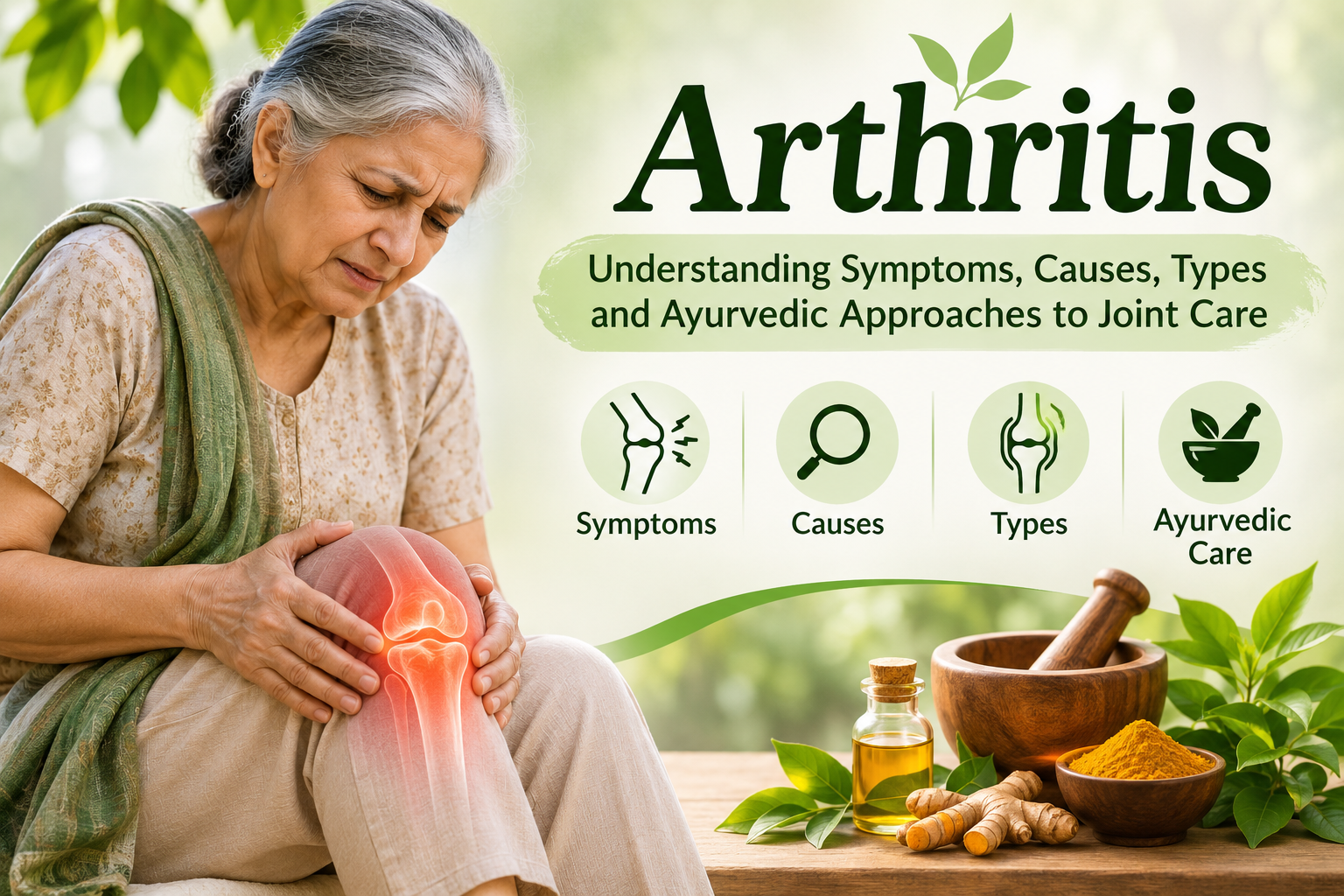
Joint pain, stiffness and difficulty moving can gradually affect your everyday life. Simple activities such as walking, climbing stairs, opening a bottle or getting out of bed may become uncomfortable. One of the common health conditions associated with these problems is arthritis.
Arthritis refers to a group of conditions that affect the joints, causing pain, inflammation, swelling and reduced mobility. It can affect people of different age groups and may involve the knees, hips, hands, wrists, ankles and other joints. Although some forms are associated with ageing, arthritis is not limited to older adults.
Understanding the condition, recognising its early symptoms and seeking appropriate medical guidance are important steps towards maintaining joint health. Alongside conventional medical care, some people explore traditional wellness approaches, including Ayurveda, to support comfort, mobility and overall well-being.
What Is Arthritis?
Arthritis is a general term used to describe conditions that affect one or more joints. Joints are the areas where two bones meet, allowing the body to move. Healthy joints contain cartilage and other supporting tissues that help reduce friction and provide smooth movement.
When a joint is affected by arthritis, these structures may become damaged or inflamed. This can lead to pain, stiffness, swelling and difficulty performing normal movements.
There are more than 100 types of arthritis, and each type has different causes, symptoms and treatment requirements. Some forms develop gradually, while others may cause sudden episodes of inflammation and discomfort.
Early assessment is important because identifying the specific type of arthritis helps healthcare professionals recommend suitable treatment and management strategies.
Common Symptoms of Arthritis
Arthritis symptoms can vary depending on the type, severity and joints involved. Some people experience occasional discomfort, while others may have persistent symptoms that interfere with daily activities.
Here are some common warning signs:
1. Joint Pain
Joint pain is one of the most recognised symptoms. It may occur during movement, after physical activity or even while resting. The discomfort can range from mild to severe.
2. Morning Stiffness
Many people experience stiffness after waking up or sitting in one position for an extended period. The affected joints may take some time to become comfortable and flexible again.
3. Swelling Around Joints
Inflammation can cause the affected joints to appear swollen. The surrounding area may also feel tender or warm.
4. Reduced Flexibility
Arthritis can limit the normal range of movement. Bending the knees, rotating the wrists or gripping objects may become difficult.
5. Joint Tenderness
Some joints may become sensitive when touched or pressed. Even light pressure can sometimes cause discomfort.
6. Fatigue and General Discomfort
Certain inflammatory forms of arthritis, particularly rheumatoid arthritis, may cause tiredness, weakness and a general feeling of being unwell.
Recognising these symptoms early can help people seek appropriate medical attention before the condition significantly affects their mobility.
What Are the Main Causes of Arthritis?
There is no single cause of arthritis. Different forms develop due to various biological, genetic and environmental factors.
Some common contributing factors include:
Ageing: The risk of developing certain forms of arthritis, particularly osteoarthritis, increases with age as joint structures undergo gradual changes.
Genetic factors: A family history of some arthritis conditions may increase a person’s susceptibility.
Joint injuries: Previous injuries, fractures or repeated stress on joints can contribute to the development of joint problems.
Excess body weight: Additional body weight increases pressure on weight-bearing joints, especially the knees and hips.
Autoimmune activity: In conditions such as rheumatoid arthritis, the immune system mistakenly attacks healthy joint tissues, resulting in inflammation.
Infections: Certain infections can trigger reactive arthritis or other joint-related inflammatory conditions.
Lifestyle factors: Smoking, physical inactivity and certain occupational activities may contribute to joint health problems.
Understanding these factors can help individuals make informed decisions about prevention, early assessment and long-term joint care.
Different Types of Arthritis
Arthritis includes several conditions, each affecting the body differently. Understanding the common types can help people recognise why symptoms and treatment approaches may vary.
1. Osteoarthritis
Osteoarthritis is one of the most common forms of arthritis. It develops when the cartilage that protects the ends of bones gradually breaks down.
It commonly affects the knees, hips, hands and spine.
Common symptoms include:
- Pain during movement
- Joint stiffness after resting
- Swelling around affected joints
- Reduced flexibility
- Discomfort during daily activities
2. Rheumatoid Arthritis
Rheumatoid arthritis is an autoimmune condition in which the immune system attacks the lining of the joints. This causes inflammation and may gradually damage joint tissues.
It commonly affects the hands, wrists and feet, often involving corresponding joints on both sides of the body.
Possible symptoms include:
- Persistent joint swelling
- Morning stiffness
- Joint tenderness
- Fatigue
- Reduced hand and finger movement
Early medical diagnosis and appropriate treatment are essential to reduce the risk of long-term joint damage.
3. Gout
Gout is an inflammatory form of arthritis associated with the accumulation of uric acid crystals in the joints.
It often affects the big toe but can also involve the ankles, knees and other joints.
Symptoms may include:
- Sudden and intense joint pain
- Redness and swelling
- Warmth around the affected joint
- Increased sensitivity
4. Psoriatic Arthritis
Psoriatic arthritis is an inflammatory condition that may develop in people with psoriasis, a skin condition that causes red, scaly patches.
It can affect the fingers, toes, spine and other joints.
Common signs include joint swelling, stiffness, pain and changes in the nails.
5. Ankylosing Spondylitis
Ankylosing spondylitis is a type of inflammatory arthritis that mainly affects the spine and the joints connecting the spine to the pelvis.
It may cause persistent back pain and stiffness, particularly in the morning or after periods of inactivity.
Each type requires an appropriate assessment and individualised management plan.
How Is Arthritis Diagnosed?
Correct diagnosis is essential because different arthritis conditions require different treatment approaches.
A healthcare professional may recommend several assessments based on the symptoms and medical history.
Physical examination: The doctor checks the affected joints for swelling, tenderness, warmth and reduced movement.
Medical history: Information about symptom duration, family history, previous injuries and existing health conditions helps guide diagnosis.
Blood tests: Tests such as ESR, CRP, rheumatoid factor and anti-CCP may be recommended when inflammatory or autoimmune arthritis is suspected.
Imaging tests: X-rays, ultrasound or MRI scans may help assess joint structures, inflammation and possible damage.
Joint fluid analysis: In selected cases, a sample of fluid may be collected from the affected joint to investigate conditions such as gout or joint infection.
The appropriate investigations depend on the suspected condition. A healthcare professional should interpret the results and confirm the diagnosis.
Ayurvedic Perspective on Arthritis
Ayurveda is a traditional system of healthcare that considers physical health, lifestyle, digestion and individual constitution when developing wellness approaches.
Traditional Ayurvedic literature discusses joint-related conditions through concepts such as Vata imbalance and Ama. These concepts belong to the Ayurvedic framework and should not be considered equivalent to modern medical explanations of arthritis.
Ayurvedic care may include individualised lifestyle recommendations, dietary guidance, herbal preparations and selected external therapies. The approach is generally intended to support comfort, movement and overall well-being.
People exploring Ayurvedic treatment in abu dhabi should consult a qualified Ayurvedic practitioner who can review their health history, existing medications and specific joint-related concerns before recommending any therapy.
It is important to understand that evidence for Ayurvedic approaches to arthritis remains limited. These therapies should not replace prescribed medication, specialist assessment or disease-modifying treatment, particularly for rheumatoid arthritis.
Ayurvedic Therapies That May Support Joint Wellness
Depending on an individual’s health condition and professional assessment, selected traditional therapies may be considered as complementary wellness approaches.
1. Abhyanga – Therapeutic Oil Massage
Abhyanga is a traditional Ayurvedic oil massage performed using suitable oils and specific massage techniques.
It is traditionally used to promote relaxation and physical comfort. Gentle massage may help some people feel more relaxed and improve their sense of well-being.
However, massage should be avoided over acutely swollen, hot or severely painful joints unless specifically approved by a healthcare professional.
2. Janu Vasti – Knee Oil Therapy
Janu Vasti is a traditional Ayurvedic procedure in which warm oil is retained over the knee area within a specially prepared boundary.
It is traditionally used for knee-related discomfort and stiffness.
The therapy should only be considered after professional assessment. Its effectiveness for treating arthritis has not been firmly established through high-quality clinical research.
3. Kizhi Therapy – Herbal Bolus Treatment
Kizhi is a traditional Ayurvedic treatment involving herbal materials wrapped in cloth and used as warm boluses during a therapeutic procedure.
Different preparations may be selected depending on the practitioner’s assessment.
Heat-based treatments may not be suitable for every arthritis patient, particularly during active inflammation.
4. Pizhichil – Warm Oil Therapy
Pizhichil involves the controlled application of warm medicated oil over the body, often combined with massage techniques.
It is traditionally associated with relaxation and physical comfort.
The temperature, duration and suitability should be assessed by a qualified practitioner, especially for people with sensitive skin, circulation problems or active joint inflammation.
5. Herbal Support
Certain herbs and traditional formulations are used in Ayurveda as part of individualised wellness plans.
However, herbal products can have side effects and may interact with prescription medicines. Some preparations may also contain harmful heavy metals.
Always consult a qualified healthcare professional before using herbal supplements. Choose properly tested products and never discontinue prescribed arthritis medication without medical advice.
Dietary Recommendations for People With Arthritis
A balanced diet can support general health, maintain a healthy body weight and provide nutrients needed for normal body function.
Although no specific diet can cure arthritis, healthy food choices may support long-term well-being.
Consider including the following:
Fresh vegetables: Include green leafy vegetables, carrots, broccoli and other colourful vegetables for vitamins, minerals and fibre.
Fruits: Berries, oranges, apples and other fruits provide antioxidants and essential nutrients.
Healthy fats: Nuts, seeds, olive oil and suitable sources of omega-3 fatty acids can form part of a balanced eating pattern.
Whole grains: Oats, brown rice and whole wheat provide fibre and help support balanced nutrition.
Protein-rich foods: Include lentils, beans, eggs, fish or other suitable protein sources to support muscle health.
Adequate hydration: Drinking sufficient water throughout the day supports normal body functions.
People with gout may require specific dietary advice to manage uric acid levels. Individuals with other medical conditions should follow nutrition recommendations suited to their needs.
Lifestyle Tips to Manage Arthritis Symptoms
Small lifestyle changes can make a meaningful difference to everyday joint health.
Stay Physically Active
Regular, gentle physical activity helps maintain flexibility, muscle strength and mobility.
Activities such as walking, swimming, cycling and supervised yoga may be suitable depending on the affected joints and the person’s physical ability.
Avoid exercises that cause significant pain or excessive strain.
Maintain a Healthy Weight
Maintaining a suitable body weight can reduce pressure on weight-bearing joints, particularly the knees and hips.
A balanced diet combined with regular physical activity can support healthy weight management.
Protect Your Joints
Avoid repetitive movements and excessive strain whenever possible. Use supportive equipment and maintain comfortable posture during work and household activities.
Get Enough Rest
Adequate sleep and rest periods help support general recovery and well-being. Avoid remaining in one position for excessively long periods.
Manage Stress
Relaxation techniques, breathing exercises and meditation may help improve emotional well-being and support a healthier daily routine.
When Should You Seek Medical Attention?
Do not ignore persistent joint discomfort or swelling. Early medical evaluation is particularly important when symptoms continue or gradually become worse.
Seek medical advice if you experience:
- Joint pain that does not improve.
- Repeated swelling or stiffness.
- Difficulty walking or using your hands.
- Morning stiffness lasting for an extended period.
- Unexplained tiredness alongside joint symptoms.
Important: Sudden severe pain and swelling in one joint, particularly when the joint is hot or red, or when accompanied by fever or chills, requires urgent medical assessment. This may indicate an infection or another condition requiring prompt treatment.
People with suspected rheumatoid arthritis should receive early specialist assessment because timely treatment can help prevent permanent joint damage.
Can Arthritis Be Prevented?
Not all forms of arthritis can be prevented. However, certain healthy habits may help reduce some risk factors and support joint health.
Consider these practical steps:
- Maintain a healthy body weight.
- Stay physically active with joint-friendly exercises.
- Avoid smoking.
- Protect your joints from unnecessary injuries.
- Follow a balanced and nutritious diet.
- Seek medical attention for persistent joint symptoms.
- Manage existing health conditions with professional guidance.
These measures cannot guarantee that arthritis will be avoided, but they can contribute to better overall health and mobility.
Support Your Joint Health with an Individualised Approach
Living with arthritis can be challenging, particularly when pain and stiffness interfere with daily routines. Understanding the condition and choosing appropriate care are important steps towards improving quality of life.
Ayurveda offers a traditional, holistic approach that may include selected therapies, dietary guidance and lifestyle recommendations as complementary support. The suitability of these approaches depends on the type of arthritis, individual health condition and professional assessment.
A combination of appropriate medical care, safe physical activity, healthy nutrition and personalised wellness support can help people manage their condition more effectively.
If you are experiencing persistent joint pain, swelling or stiffness, consult a qualified healthcare professional to identify the cause and discuss suitable treatment options. A personalised approach can help you make informed decisions about your long-term joint health.
Frequently Asked Questions About Arthritis
1. What is the main cause of arthritis?
Arthritis has several possible causes, depending on the type. These include age-related joint changes, autoimmune activity, genetic factors, previous injuries, infections and metabolic conditions.
2. What are the early signs of arthritis?
Common early signs include joint pain, morning stiffness, swelling, tenderness and difficulty moving the affected joints. Symptoms may develop gradually or appear during episodes of inflammation.
3. Can arthritis affect young adults?
Yes. Although some forms are more common with increasing age, arthritis can affect young adults and children. Autoimmune, inflammatory and other forms may develop at different ages.
4. Is walking good for people with arthritis?
Walking may help maintain mobility, flexibility and general fitness. However, the intensity and duration should be adjusted according to the individual’s condition and physical ability.
5. Can Ayurveda help with arthritis?
Some people explore Ayurvedic therapies as complementary support for joint comfort and general well-being. However, scientific evidence remains limited, and Ayurveda should not replace appropriate medical diagnosis or prescribed treatment.
6. Which Ayurvedic therapies are traditionally used for joint discomfort?
Traditional therapies may include Abhyanga, Janu Vasti, Kizhi and Pizhichil. Their suitability depends on the person’s condition, and they should only be performed following an appropriate professional assessment.
7. Is arthritis completely curable?
Many forms of arthritis are long-term conditions. While there may not be a permanent cure for every type, appropriate treatment can help control symptoms, improve mobility and reduce complications.
8. What foods should people with arthritis eat?
A balanced diet containing vegetables, fruits, whole grains, healthy fats and adequate protein can support overall health. Specific dietary requirements may vary, particularly for people with gout or other medical conditions.
9. Does excess weight make arthritis worse?
Excess body weight can increase pressure on weight-bearing joints, especially the knees and hips. Maintaining a healthy weight may help reduce mechanical stress on these joints.
10. When should I consult a doctor for joint pain?
Consult a healthcare professional if joint pain, swelling or stiffness persists, returns frequently or interferes with daily activities. Sudden severe joint pain with swelling, heat or fever requires urgent medical attention.